Quarter Required: The Man Who Refuses to Unplug America's Loneliest Machine
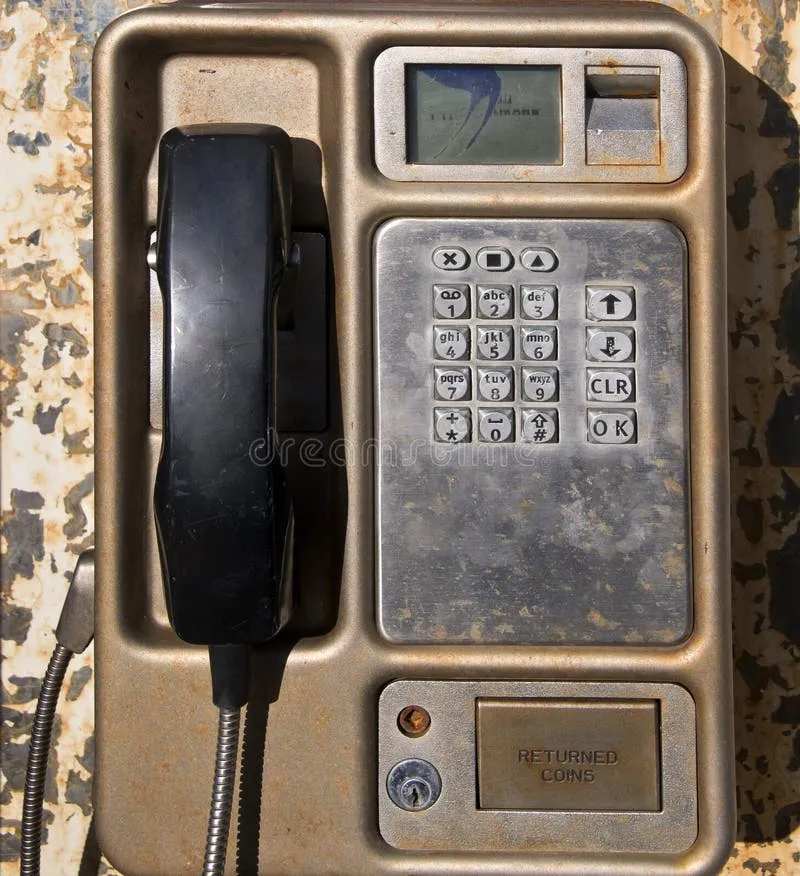
Photo: old pay phone on wall of rural hardware store americana, via thumbs.dreamstime.com
The pay phone outside Dale's Hardware in Wabaunsee County, Kansas, does not work for everyone. It works, technically. The dial tone hums, the coin slot swallows quarters, and if you dial out, a human being might actually pick up on the other end. But the phone only answers to people who understand what it is: a small, stubborn act of refusal.
Dale, who has owned the hardware store since 1987, installed the phone when his mother ran the register. The phone company tried to pull it in 2009. He talked them out of it. They tried again in 2015. He talked them out of it again. "It ain't hurting anything," he told me, gesturing with a paint stirrer. "And every couple of years, somebody needs it."
The Arithmetic of Uselessness
By almost any measure, Dale is right that it isn't hurting anything, and wrong that somebody needs it. There are fewer than 30,000 pay phones left in the United States, down from around 2 million at their peak in the mid-nineties. Most of those remaining are in airports, prisons, and the lobbies of buildings that haven't updated their insurance paperwork since the Clinton administration.
And yet. Standing there in the gravel lot, feeding a quarter into a slot out of pure anthropological instinct, I felt something I hadn't felt from a phone in twenty years: weight. The receiver had heft. The cord had slack. The whole apparatus communicated, in a way no glass rectangle ever has, that a conversation was a physical event with a beginning, a middle, and a hang-up.
Who Actually Uses These Things
The clerk at the gas station two towns over told me about a kid who came through last summer on a road trip — phone dead, charger left in a motel in Missouri, no cash for a cable. He used the pay phone to call his dad, who read a credit card number over the line, and the kid bought a charger and drove on. Total transaction time: maybe four minutes. It's not a system. It's a parachute.
That's the thing about obsolete infrastructure: its value isn't in the metrics. Nobody computes the ROI of a fire extinguisher until the kitchen's on fire. A pay phone is a fire extinguisher for the modern condition — the condition being that our entire ability to reach other human beings now hangs on a battery, a signal, and a software update we keep postponing.
A Tour of the Almost Gone
I didn't set out to write a survey, but once you start noticing pay phones, you can't stop. There's one outside a VFW hall in rural Ohio that rings sometimes, just to ring — the local theory is that AT&T's decommissioning process never fully finished, and the line is a ghost. There's one in a bar in Butte, Montana, where the bartender keeps a cup of quarters by the register labeled "PHONE — PAY ME BACK NEVER." There's a coinless one in a New Mexico rest stop that connects to a taxi company for free, a service that made perfect sense in 1998 and makes even more sense now, if you think about it.
Each one is maintained by someone who made a quiet decision not to deal with the paperwork of removal. That's it. That's the whole heroism of it. Nobody's preserving these phones for history. They're just not getting around to letting go, and in that gap between obsolescence and demolition, something rare happens: a piece of the shared grid survives.
What We Actually Lost
Here's what I kept circling back to on the drive home. The pay phone wasn't really a phone. It was a promise embedded in concrete — that if you were stranded, broke, lost, or in trouble, the world had provisioned for you. Not your contacts list, not your emergency fund. You. A stranger's machine, bolted to a wall, waiting.
We replaced that promise with something faster and vastly more fragile. I love my phone. You love yours. But there's no version of my dead battery that ends with a stranger's hardware helping me, no public infrastructure at all, really, that assumes I might need saving.
Dale's phone rings while I'm still standing there. He waves off the idea of answering it — it's for him, and he's busy — but he seems pleased it rang at all. "Keeps the line alive," he says, which I suspect is both a technical statement and a philosophy.
The quarter comes back out of the return slot, shiny and warm from sitting in the sun. I leave it on the shelf under the phone for the next stranded soul. It seems like the kind of system Dale would approve of.