Voices in the Dark: Riding Shotgun With the Midnight DJ of a Town That Can't Sleep
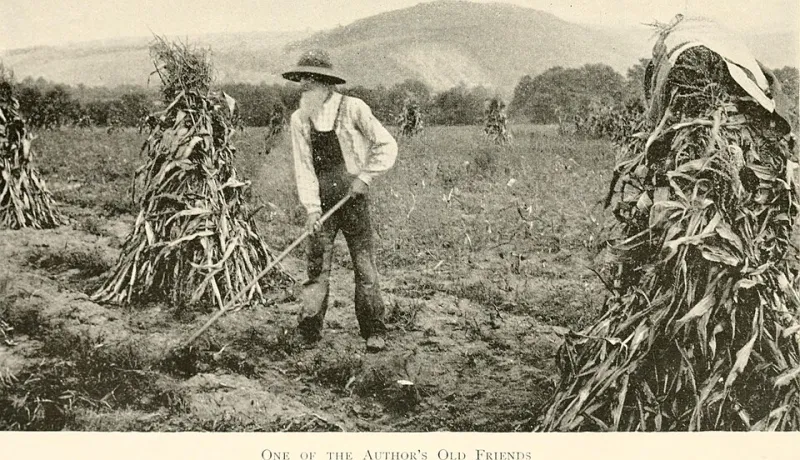
Photo: Underwood, Francis Henry, 1825-1894, No restrictions, via Wikimedia Commons
The sign outside the station says the antenna has been on the air since 1953, but the building itself looks like it could be a dentist's office that gave up. One story. Fluorescent light humming behind frosted glass. A coffee maker older than me. At 11:47 p.m., I knocked, and a voice through the intercom said, "It's open — mind the cord."
The cord belonged to Ray Deluca, sixty-one years old, the overnight host of KJUN-AM, 1340 on your dial, serving a patch of prairie where the nearest big city is a two-hour drive and the nearest streaming service is, technically, everywhere. Ray has hosted the midnight shift for nineteen years. He takes requests. Live. On the phone. From anybody who calls.
The Phone Rings at 12:04
It doesn't take long. Four minutes into his shift, the board lights up and Ray flips a switch without breaking eye contact with his coffee.
"KJUN, you're on with Ray."
"Hey Ray, it's Darlene. Play something for Earl down at the co-op — he's greasing the augers and he's grumpy."
"For Earl at the co-op. Grumpy men get Waylon. That's the rule." He cue-ups a tape — an actual cassette, hand-labeled — and Waylon Jennings fills a signal that reaches maybe forty miles in every direction.
Darlene isn't asking for a song. Not really. She's telling a town that Earl is out there, working, and that somebody thought of him. Ray understands this better than anyone. "People think it's a music show," he told me between records. "It's a roll call. I'm just reading the list out loud."
Who's Awake at Midnight, and Why
Over the course of the night, the callers form a portrait of everyone the modern world forgot to schedule. A nurse coming off a double at the county hospital. A trucker somewhere outside Broken Bow, riding the edge of the signal like it's a campfire. A widower named Carl who calls every Tuesday to request the same Patsy Cline song — "she liked it," is all he says — and every Tuesday Ray plays it without making him explain himself.
There's a kid studying for his CDL, a mother pacing with a colicky baby, and once, a man who just wanted to hear a human voice confirm what day it was.
Ray never rushes any of them. He has a rule: nobody hangs up feeling like a wrong number. In an era when an algorithm can predict your taste in music better than you can, Ray can't compete on curation. He competes on the one thing Spotify will never have: he knows your name, your tractor, and your late wife.
Why This Little Station Won't Die
The economics are almost comical. The station's total overnight audience might number in the hundreds. The ad revenue comes from a hardware store, two funeral homes, and a seed company. Ray's salary, by his own cheerful admission, "wouldn't impress anybody."
And yet. When the flood took out cell service in 2019, KJUN was the only thing working. When the high school team made state, the whole town heard about it here first, in Ray's voice, at 1 a.m., because he couldn't wait for morning either.
Media analysts will tell you local radio is a candle burning down. Maybe. But sitting in that cinderblock studio at 3 a.m., watching Ray take a dedication from a woman for her son on deployment, I understood that the math is wrong. The station isn't surviving despite the streaming era. It's surviving because of it. The more of our lives gets automated and personalized and handed to us by a screen, the more valuable a live human becomes — someone who is simply, reliably, there, in real time, on purpose.
The Part Where I Get Personal
I'll admit I went in as a skeptic. I write this from a laptop, in a house full of smart speakers, and I assumed the overnight AM request show was a nostalgia act, a historical reenactment with commercials.
I left at sunrise with a different theory. Ray's show isn't old technology. It's a service that streaming never offered and never will. You can't call an algorithm at 12:04 a.m. and ask it to say hi to Earl. You can't dedicate a Patsy Cline song to a memory. There's no button for "I just didn't want to be the only one awake."
Driving out of town as the sky went pink over the grain elevator, I scanned the radio dial out of habit and found the signal, thin and crackling, holding on at the edge of range. Ray was wrapping up, signing off with the same line he's used for nineteen years:
"If you're out there and you made it through the night, you did your part. Go get some sleep. I'll leave the light on the air for you tomorrow."
I sat in a gas station parking lot and listened to the whole thing. It felt rude not to.