When a Town Fights for a Sign Instead of the Building Under It
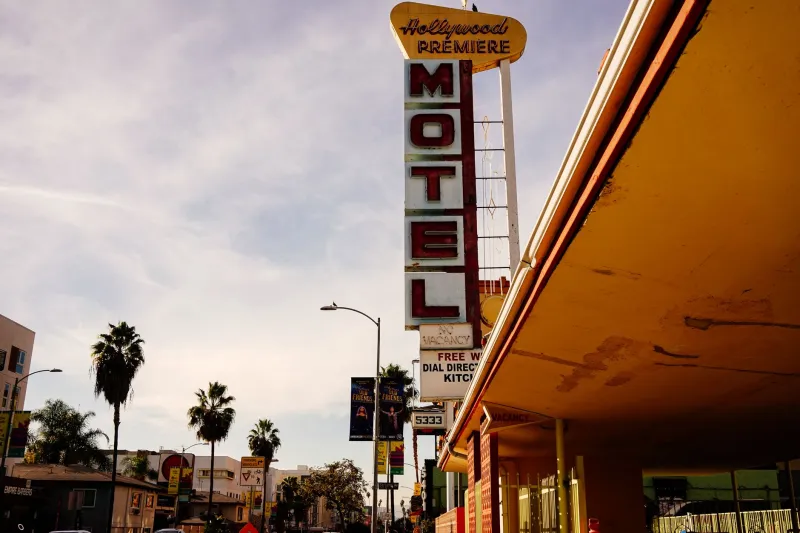
There's a particular kind of heartbreak in watching a motel die. The rooms go first — boarded windows, a mattress slumped against the wall like it fainted. Then the pool, drained and littered with leaves. But the sign? The sign often outlives everything. It buzzes on over an empty parking lot for years, glowing for guests who stopped coming a long time ago.
I spent two weeks driving stretches of old Highway 99 in California and the remnants of Route 66 out west, chasing that glow. What I found surprised me. The motels themselves are mostly beyond saving. The signs are another story entirely. And the people fighting for them have made a choice that says something odd and wonderful about this country: sometimes we'd rather keep the beacon than the building.
The Man Who Answers the Phone at Midnight
In a metal shop outside Sacramento, a guy named Ray still bends glass tube by hand. Ray is one of maybe a few dozen people left in America who can do this — heat a glass tube over a ribbon flame, bend it into a letter, pump in neon or argon, and zap it with enough voltage to make it burn red or blue for decades.
"Motels call me when the sign dies and they want it fixed," Ray told me, hands blackened with soot. "Nine times out of ten, the rooms are a disaster and the sign is the only thing on the property that still works. I tell them: fix the sign. Skip the rooms. Nobody books a room because the mattress is new. They book it because the sign promised them something."
Ray's waiting list is eleven months long. Most of his new work isn't repair at all — it's restoration for signs that have been rescued from demolished buildings and re-erected in parks, museums, and the occasional front yard.
The Collector with a Motel Sign in His Backyard
Which brings me to Dale, in central Oregon, whose backyard features a fully restored fourteen-foot sign from a motel that closed in 1989. The motel is a memory. The sign, which once pointed weary travelers toward a good night's sleep off the old Dalles-California highway, now points at Dale's tomato plants.
"My wife said I had until the neighbors complained," he said. "The neighbors asked if I could make it blink."
Dale is part of a loose network of collectors who troll estate sales, demolition notices, and Craigslist for vintage neon. A rescued sign can cost anywhere from a few hundred bucks to five figures depending on condition and provenance. There's a whole subculture with its own forums, swap meets, and fierce debates about whether a sign should be restored to original condition or left weathered. (Dale restores. "Neon is optimism," he told me. "Weathered neon is a compromise.")
Why the Sign and Not the Motel?
Here's the question that followed me the whole trip: why are these towns fighting harder for a sign than for the buildings beneath them?
Part of it is practical. A motel with failing plumbing, ADA-noncompliant stairs, and thirty years of deferred maintenance is a money pit. A sign is a finite, achievable rescue. You can save a sign in a weekend with six volunteers and a flatbed truck. Saving a motel takes a developer, a grant writer, and a miracle.
But part of it is something else. The signs are the part of the story that was addressed to strangers. A motel room is private, forgettable. The sign was a public promise, repeated nightly for fifty years: Vacancy. Air conditioned. Color TV. Welcome. These signs went up when the highway was the main street of American life, when a family road trip meant rolling into some town you couldn't pronounce at dusk and trusting a glowing cartoon arrow to deliver you to safety.
In one small town on the 99, I watched a community meeting where residents debated a historic designation for a motel sign — the "Lucky Star" — while the motel itself sat condemned. A woman in the third row put it better than any preservationist pamphlet I've read: "The building was where people slept. The sign is where we said hello."
The sign got the designation.
The Glow Economy
Something interesting is happening, though. The signs are becoming economic engines in their own right. Towns that lost their motels are discovering that a restored sign draws road-trippers, photographers, and the increasingly lucrative Instagram pilgrimage crowd. In Arizona, a restored sign for a long-dead motel now anchors a small visitor center and gift shop. The motel is gone; the sign employs two people.
It's easy to be cynical about this — saving a trinket while the substance disappears. But standing in a gas station parking lot at 10 p.m., watching a family pull over to photograph a buzzing 1950s sign that hasn't advertised a room in twenty years, I felt something less cynical. The sign still does its original job. It says stop here. This place noticed you.
Before the Lights Go Out
The clock is running. Neon is expensive to maintain, the tradespeople are aging out, and LED retrofits — cheaper, longer-lasting, undeniably sensible — are replacing glass tube all over the map. Some preservationists have made peace with LEDs. Ray has not. "LED is a picture of neon," he said. "Neon is neon."
If you want to see the real thing before it dims, take the two-lanes instead of the interstate. Old 99, the remnants of 66, the Lincoln Highway. Look up. Somewhere out there, a tube is still burning for a motel that no longer exists, glowing for nobody, glowing for everybody.
That's not nostalgia. That's a promise that outlasted the promise-keeper. And honestly, that might be the most American thing on the road.