Painted Ghosts: Chasing the Faded Ads That Still Whisper From America's Brick Walls
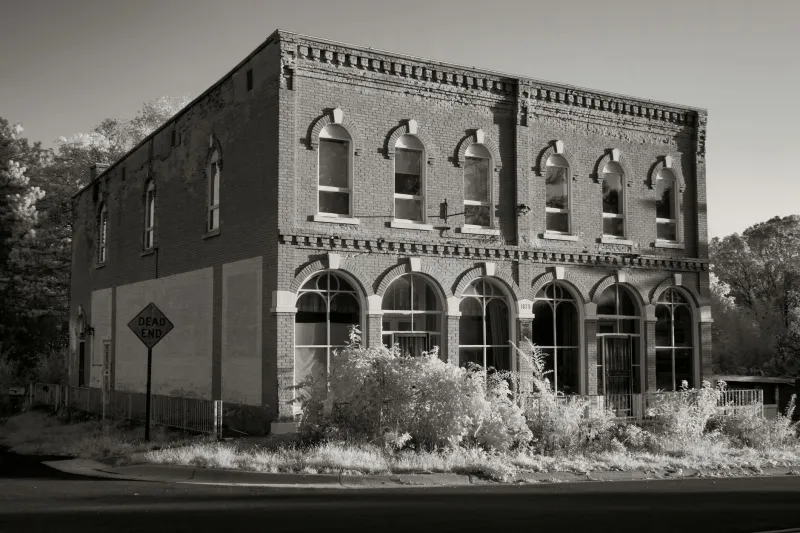
The first one I ever noticed was on the side of a pharmacy in Hannibal, Missouri: DRINK OCO, it said, in letters the color of an old bruise. I must have driven past a thousand signs like it before, but that day I pulled over. Oco what? Who painted it? Why was I the only person on this street who cared?
That was two summers and about 4,000 miles ago. Since then, I've learned the name for what I was chasing: ghost signs — the weathered remnants of hand-painted advertising, usually on brick, usually older than anyone still living on the block. Once you start seeing them, you can't stop. They're everywhere once you slow down enough to look up.
The Wall-Painting Economy Nobody Remembers
Here's the thing about these ads: they weren't art. They were commerce, plain and simple. From roughly the 1880s through the 1940s, companies hired wall dogs — the trade name for sign painters — to slap their logos onto whatever vertical surface a town could offer. A wall dog could earn $15 a week doing it, which was decent money when it was decent money.
The big national brands got around. That's why you can find nearly identical Coca-Cola and Mail Pouch Tobacco ads in Ohio, Georgia, and Montana. But the signs I love most are the local ones: HOTEL — 75¢, J. WHITFIELD & SON, UNDERTAKERS, a boarding house promising hot meals and electric lights. These weren't campaigns. They were one painter, one wall, one afternoon of his life — and that afternoon is still there.
What the Sun Takes, and What It Leaves
Ghost signs fade unevenly, which is part of their strange beauty. Lead-based pigments in reds and whites hold on for a century; the blues and greens surrender first. A sign might read clearly in overcast light and vanish entirely at noon. Locals will tell you the best viewing happens right after rain, when wet brick darkens and the old letters seem to switch on.
Some towns have lost theirs for dumber reasons than weather. Vinyl siding is the great eraser of American vernacular advertising — one bad renovation and a 120-year-old ad becomes a beige rectangle. Historic preservation folks call this "remuddling," and they say it with real venom.
The People Who Repaint the Past
In Lexington, Missouri, I met a retired mail carrier who drives two hours on weekends to touch up a single wall advertising a dry goods store that closed in 1957. He's not paid. He's not asked. He just decided, in his words, "that wall is the only autobiography this town has."
There's a loose national network of people like him — sign painters, preservationists, and hobbyists who track, document, and occasionally restore these walls. Some restoration purists argue you should never repaint a ghost sign, only stabilize it; others think a faded ad restored to full color is a lie about the past. The arguments get surprisingly heated for a hobby that mostly involves ladders and brick.
I land somewhere in the middle. A sign restored with the painter's original lettering and colors, documented and dated, feels like a translation. A sign "refreshed" by a well-meaning Chamber of Commerce with modern paint and kerned fonts feels like a cover band.
Reading a Town by Its Walls
Here's what I've come to believe after all these miles: ghost signs are a census nobody filed. They tell you what a town sold, what it drank, where it slept its railroad travelers, and roughly when it stopped believing in its own future. A town with three painted hardware ads and one for a bank was a town that made things. A town whose last visible ad is for a savings and loan tells you exactly which decade the money left.
And yet the signs persist, mostly out of neglect. The cheapest thing to do with an old brick wall is nothing, and nothing is exactly what these ads needed to survive. There's a lesson in that, I think, about what lasts. Not the billboards — those get swapped every sixty days. The hand-painted stuff, done by a man on a ladder for eleven dollars, outlived the company, the product, and everyone who bought it.
The next one on my list is in a town of 400 people in Nebraska, advertising a soda I cannot find a single record of anywhere. The painter's great-granddaughter still lives across the street. I'm going to knock on her door.
Bring the Oco, if I find it. I'll drink to whoever painted that wall.