Twenty Seconds of Fame: When Your Voicemail Greeting Was Your Whole Personality
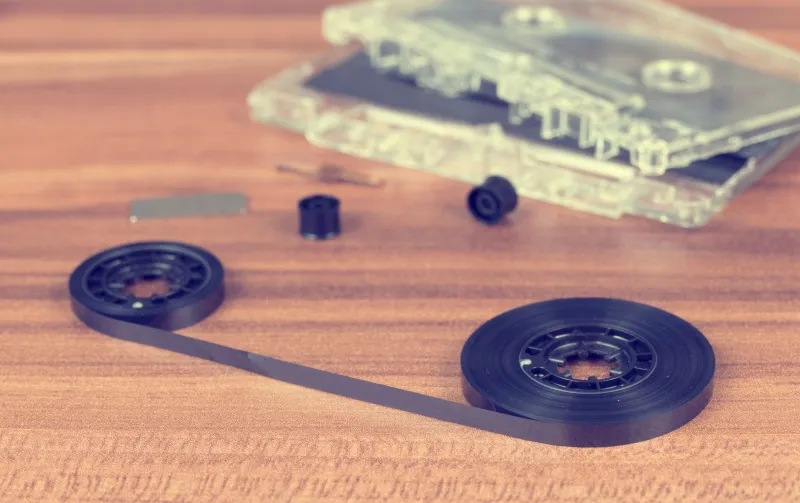
Somewhere in a shoebox in my parents' closet in Ohio, there is a microcassette labeled, in my mother's handwriting, "machine tapes — DO NOT TAPE OVER." On it: roughly six years of our family's outgoing voicemail greetings. My brother at 14 doing a bit where he pretended to be a hostage negotiator. My dad clearing his throat for a full three seconds before saying anything. My grandmother, who we called Nana Fran, singing a jingle she invented for her own phone number, set to the melody of a Mr. Softee truck.
We saved them the way you save ticket stubs. And I'd argue we were right to.
The Tiny Theater of the Kitchen Counter
Think about what an outgoing message actually was: a 20-second recording that anyone who called you would hear. Your ex. Your boss. The school nurse. A wrong number from a telemarketer in Boca Raton. You were broadcasting a compressed version of yourself to whoever dialed, and there was no way to know who.
So people performed. Teenagers recorded skits — the "we can't come to the phone" fake-out was the summer camp talent show of its day. Whole families did bits together, a mom and dad and two kids talking over each other like a sitcom cold open. A guy I worked with in the mid-'90s had a greeting where he did a dead-on impression of his own mother, then broke character to say, "Alright, leave a message."
And it wasn't all jokes. Some greetings were strangely earnest. "Hi, we're not home right now, but we're probably at Danny's baseball game, so leave a message and we'll call you back tonight." That's not just logistics. That's a portrait. You learned things from greetings. Who was coaching little league. Who had a new baby and a new, exhausted voice. Who had switched to a somber, formal tone because something had happened, and the machine knew before you did.
Tape Doesn't Lie
I talked to a few people who still have their old tapes, because of course they do. A retired schoolteacher in Minnesota named Carol played me a cassette from 1991 — her late husband's greeting, recorded on a GE machine the size of a hardcover book. He says the family name, then the number, then "you know what to do." Flat. No performance at all. Carol laughed, then got quiet for a second. "He hated the machine," she said. "But that's him. That's exactly him."
That's the thing about these recordings: they were unedited and unfiltered in a way almost nothing in our lives is now. No retakes for most people — the machine recorded live, kids yelling in the background, dog barking, the clatter of a spoon in a coffee mug. What got saved was the ambient sound of an actual household on an actual Tuesday.
Compare that to today's default. "You've reached [number]. Leave a message." Or more often, nothing at all, because who calls? The default carrier greeting is a landfill of sameness — millions of Americans funneled through the same robotic sentence. We optimized away the weirdness.
We Wanted to Be Reached
Here's the part I keep turning over. An elaborate answering machine greeting only makes sense if you believe phone calls are coming, and worth taking. It's an artifact of a culture that assumed contact, expected it, prepared a little stage for it.
Now we screen everything. A call from an unknown number is presumed hostile — probably a robocall about your car's extended warranty. Texting let us respond on our own schedule, which felt like freedom, and partly was. But something got lost in the trade: the small social contract of the machine. You called, you heard a person's voice, you left your own. Two voices, one thread of tape. Asynchronous, sure, but human all the way through.
The greeting was also a tiny act of optimism. You were telling the world: I'm not here right now, but I will be, and when I am, I'll call you back. That's a promise people made out loud, in their own voices, every day, to anyone who dialed.
Bring Back a Little Bit of the Bit
I'm not nostalgic for the technology. Tapes chewed themselves, machines ate messages, and the blinking 12:00 on a VCR's cousin was the background radiation of the era. I don't miss rewinding anything.
But I'd defend one small revival: the personal outgoing message. If you must have a voicemail at all, make it yours. Say your name like a person. Add one sentence that's true. Tell people the dog is fine, that you're in the garden, that you'll call back after the game. Twenty seconds. No performance required — though if you've got a bit, honestly, the world could use it.
Somewhere in that shoebox in Ohio, Nana Fran is still singing about her phone number. Nobody will ever call that number again. But the tape doesn't know that, and neither did she. She just wanted whoever was listening to know she was glad they called.
That's not a bad thing to leave behind.