Thirty Days in the Driver's Seat: I Became My Neighborhood's Free Taxi and Learned What Ride-Sharing Took From Us
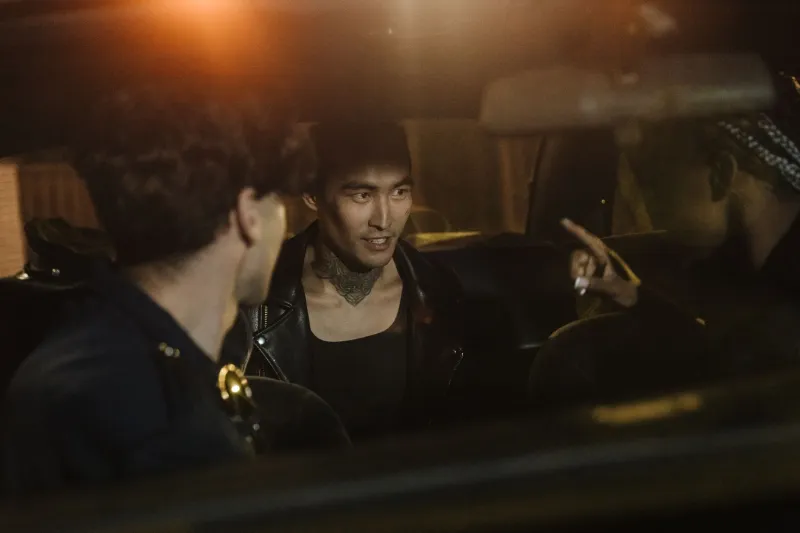
It started with a text from my neighbor Diane, whose ancient Honda had finally given up the ghost somewhere between her driveway and the Kroger parking lot. Any chance you're free Thursday? Need to get to the airport.
The old me would have sent a polite 'sorry, busy!' and gone back to whatever I was pretending was important. Instead, I typed back: 'What time?'
Somewhere between her gate and my parking spot, an idea lodged itself in my brain and refused to leave. What if I just... said yes? For a month. To everyone. What if I became the neighborhood's unofficial shuttle service, no Venmo requests accepted, and saw what actually happened?
So that's what I did. Thirty days. Every 'can you pick me up?' got a yes.
The Itinerary Nobody Asked For
Here's the thing about offering yourself up as a free ride: people need rides. A lot of them.
The month included two airport runs (Diane, plus my coworker Marcus, whose wife's flight landed at 11:40 p.m. on a Sunday, which is its own special circle of highway). A vet appointment for a cat named Biscuit who screamed the entire twelve minutes like he was being delivered to prison. Three trips for Raymond, seventy-eight years young, who no longer drives at night and had a granddaughter's band concert, a church fish fry, and a cardiologist appointment stacked into one week.
And then there was Kayla.
Kayla is sixteen, lives two doors down, and works the closing shift at the Dairy Queen on Route 9. Her mom works nights. One Tuesday she texted my wife, who forwarded it to me: her ride fell through and she was standing outside the Dairy Queen in the rain.
I pulled up at 10:15 p.m. She got in, said thank you, and stared out the window. For about ninety seconds, the car was silent.
Then she started talking. And she did not stop until I pulled into her driveway.
The Passenger Seat Is a Confession Booth
Here's what nobody tells you about driving people places: they talk. Not the way they talk at a dinner table, with eye contact and the polite choreography of conversation. They talk the way you talk to the highway — sideways, unguarded, eyes forward.
There's something about the passenger seat that loosens people up. Maybe it's that they can't leave. Maybe it's that you're both looking at the same road, so the silence never feels like failure. Maybe it's just that a car is a small room moving fast enough that small talk runs out of gas quickly.
Marcus told me about his marriage, unprompted, somewhere around mile four of the airport expressway. Raymond told me he'd outlived both his brothers and that Sundays were the hardest day. Kayla told me about a friendship that was falling apart and a college essay she was terrified to write. Diane, on the return trip from the airport, told me she and her sister hadn't spoken in two years and she didn't know how to fix it.
Nobody cried. Nobody wanted advice. They just talked, and I drove, and somehow that was the whole point.
I kept thinking: when was the last time I had a conversation like that? Because I'll tell you when I don't have them. In my car, alone. Listening to a podcast. Or in an Uber, where the driver and I perform a brief, mutually agreed-upon pantomime of friendliness before retreating into our phones.
What the App Actually Took
Look, I'm not here to trash ride-share. It's genuinely useful, and for plenty of people it's a lifeline. But somewhere in the last decade, we quietly outsourced one of the last standing appointments for unfiltered human contact.
Think about what a ride used to be. Your dad driving you to college, both of you pretending not to be emotional. Your friend picking you up from the mechanic, which turned into two hours of catching up. The carpool where you learned everything about your coworkers' lives whether you wanted to or not.
A stranger in a Camry with a air freshener shaped like a pine tree is not the same transaction. It's efficient. It's frictionless. And it's empty by design, because both parties understand the deal: minimal contact, maximum convenience. We optimized away the friction, and it turns out the friction was where the friendship lived.
The math of my month: roughly 340 miles, about $60 in gas, and somewhere north of twenty hours of conversation I would not have had otherwise. Some of it was boring. Most of it wasn't.
The Rules I'd Recommend
If you want to try this — and I think you should, even for a week — a few things I learned the hard way:
Say yes fast, before your brain drafts the excuse. Every 'let me check my calendar' was a polite no in a trench coat.
Don't fill the silence. The first two minutes of any ride are awkward. Let them be awkward. Something's usually on the other side.
Refuse the gas money. At least once. The 'no, seriously, I owe you one' that comes back to you later is worth more than eleven dollars.
Take the late-night ask. Especially the teenager standing in the rain outside a Dairy Queen. That's not a ride. That's an intervention you didn't know you were making.
Nobody Says Thank You Like a Person Getting Out of Your Car
The month is over. My yes-spree has officially ended, and I'd be lying if I said I'm signing up to drive Biscuit to the vet on a standing basis.
But something stuck. Last week Raymond called — not texted, called, like a maniac — to ask if I wanted to come to the fish fry with him. Kayla's mom dropped off a plate of cookies with a note. Diane and her sister, for the record, are speaking again. She told me that in the car, apparently. To me. On the way to the airport.
I used to think giving someone a ride was a favor. Now I think it might be the other way around. The person in your passenger seat is doing you one — handing you thirty minutes of their actual, unedited life, the kind we've all learned to keep behind a lock screen.
So the next time your phone buzzes with any chance you're free Thursday? — check your calendar if you must. But check what else you might be free for, too.