I Knocked on 22 Doors in One Month and Survived the Awkwardness
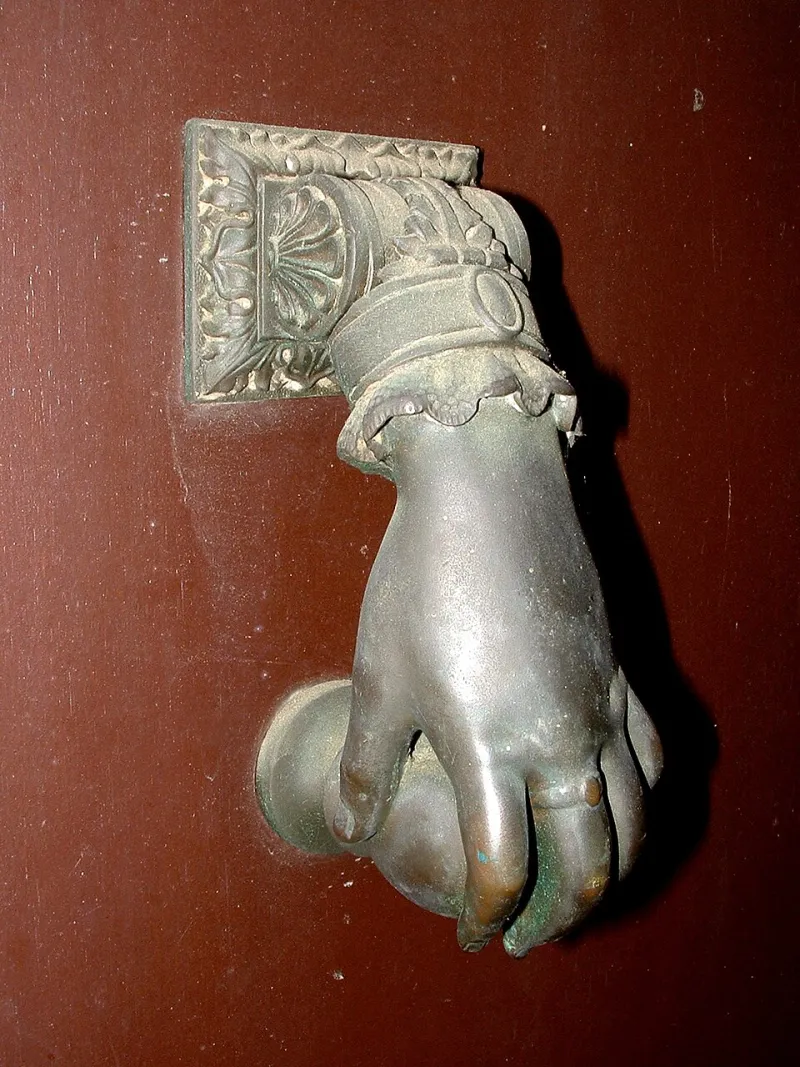
Photo: OliBac from FRANCE, CC BY 2.0, via Wikimedia Commons
My grandmother had a rule about dropping by: you knocked twice and then you made yourself useful. If she was shelling peas on the porch, you sat down and shelled. If she was napping, you came back Thursday. What you did not do was text her three weeks out to propose a coffee.
She didn't have a phone that texted, for one. But mostly, she believed something most of us have quietly abandoned: that a home is a place people pass through, not a venue you book.
I decided to test that belief the only way I know how, which is badly and in public. For one month, I stopped making plans. No calendar invites, no "does Saturday work?" No "we should grab lunch sometime" — the phrase that has replaced actually grabbing lunch sometime. Instead, I simply showed up. Unannounced. At friends' houses, my sister's place, a former roommate two towns over, an uncle I'd been meaning to call since Christmas. Twenty-two doors in all.
Here's the field report.
Most People Were Glad. A Few Were Genuinely Not.
The first knock was the hardest. I stood on my friend Dana's porch rehearsing an apology for existing. When she opened the door, mid-laundry, hair in a claw clip, her face did something interesting: a flicker of panic, then a full-body exhale. "Oh thank God, it's just you," she said, and pulled me inside.
That flicker-then-exhale happened over and over. We are startled by unannounced visitors the way we're startled by a doorbell camera alert — a small threat assessment — and then, almost universally, relieved. Relieved that someone came without being asked. Relieved that friendship arrived in physical form instead of as a thumbs-up emoji.
Not everyone, though. One old friend opened the door a crack, visibly recalculating his afternoon. Another was out, obviously, and I left — per my own rules — a note that said only "was in the neighborhood, love you." My sister's neighbor, whom I'd met twice, got a knock and gave me fifteen confused minutes on his patio before I understood I had misread our entire relationship.
Twenty-two doors. Sixteen answered and glad. Four out. Two polite but puzzled. That's a batting average I did not expect.
We Didn't Stop Dropping By Because We Got Busy
The standard explanation is time. We're all overscheduled, the story goes, so spontaneity died of natural causes.
I don't buy it. We have never had more tools for finding out whether someone is home. We know when their car is in the driveway because we saw it on Instagram. We know they're "working from home today." My grandmother managed surprise visits with zero real-time data and a party line.
What actually changed is that we started treating our homes as performances. The house has to be ready. The snacks have to be ready. We have to be ready. Somewhere along the way, hospitality stopped being about receiving people and became about producing an experience, and a production requires a date. Nobody wants friends dropping in on a dress rehearsal.
There's also the small matter of control. A calendared hangout can be vetted, rescheduled, optimized. A knock on the door is a tiny surrender. You might catch someone on a bad day. You might be the interruption. And being an interruption, we've decided, is rude — as if friendship were a service with office hours.
What the Knock Recovers
Here's what the scheduled hangout cannot give you: the real version of a person.
Every single time someone opened that door mid-mess, I got the unedited them. The sink full of dishes. The kid mid-tantrum. The bathrobe. And every single time, the conversation was better for it — less of the "how's work" theater, more of the actual stuff. Dropping by compresses the distance between people the way nothing scheduled can, because you're not meeting the hosted version. You're meeting the resident.
It also distributes friendship more fairly. The people who are great at planning — the group chat organizers, the calendar warriors — end up as the load-bearing walls of every social circle. Dropping by lets the rest of us carry some weight. You don't need to plan a brunch. You need to be in the neighborhood with a six-pack of the good root beer.
Some Rules of the Road
The month taught me a few things worth passing on, in case you want to try being a small-scale menace:
- Knock, don't lurk. Ring once, step back, look harmless.
- Have an exit built in. "I can only stay twenty minutes" makes the visit a gift, not a demand.
- Bring something low-stakes. A coffee. A zucchini from your garden, because August demands it.
- Take the no gracefully. "Catch you later" and mean it. A drop-in that turns into guilt is a debt collector at the door.
- Return the favor. Leave your own door crackable. Tell people they're welcome to try you.
That last one might be the whole ballgame. We can't bring back the drop-in if our own porches are closed. Half of why nobody shows up is that nobody shows up.
The Door Is Still There
On day twenty-nine, my uncle Earl — the one I owed a call since December — opened his door, looked at me for a long second, and said, "Well. Took you long enough." We sat in his kitchen for two hours while he told me the same three stories he always tells, and I wouldn't have traded a scheduled brunch for it.
I'm not going to pretend the drop-in is coming back as a national norm. The calendar won. But I've kept it up, maybe once a week, and something has shifted in my little corner of the world. People show up at my door now, unannounced, apologetic, holding gas station snacks. Dana came by last Tuesday with her laundry, basically, and we talked until dark.
Our homes don't have to be appointment-only. The doorbell works both ways. All it takes is one person willing to be a small interruption — to knock twice, and if nobody's shelling peas on the porch, come back Thursday.