Blinking Red: The Ohio Family Who Refuses to Let Their Messages Go to the Cloud
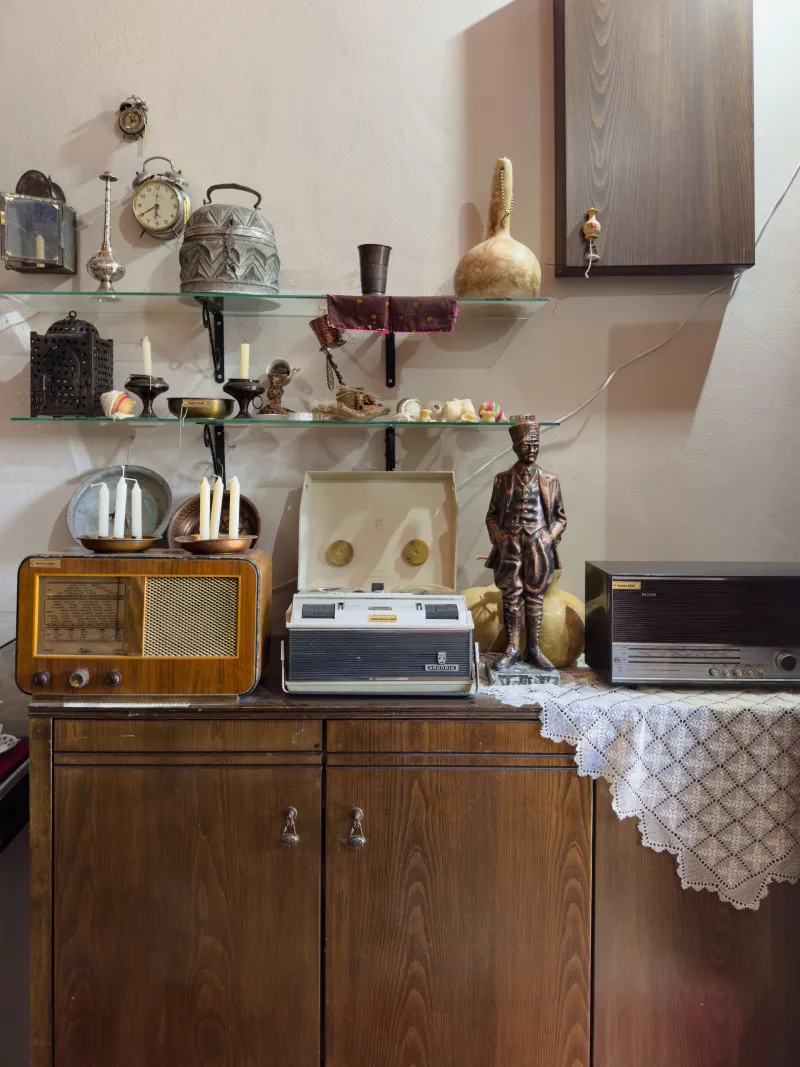
Photo: vintage beige answering machine with red blinking light on kitchen counter, via images.pexels.com
The light is what gets you first. A small red diode, blinking in a kitchen in Dayton, Ohio, at a rhythm that hasn't changed since the Reagan administration. Three blinks, pause. Three blinks, pause. It means three messages are waiting on a magnetic tape inside a beige box that is older than the woman who owns it.
Rosa Delgado, 71, has owned her answering machine since 1989. She bought it at a Sears that no longer exists. It has survived two moves, one divorce, a flood in a basement in 2004, and the entire arc of the smartphone era. When I asked her why she keeps it plugged in, she looked at me the way you'd look at someone who asked why you keep a photo album.
"Because the messages are on it," she said, as if that settled everything.
And in a way, it does.
Tape Doesn't Update Itself
Here's what Rosa means, and it took me a while to understand. Her answering machine doesn't sync. It doesn't migrate to a new device when she upgrades — and she hasn't upgraded a phone in eleven years. The voicemail her late husband left her in 2001, telling her he'd be home late and to save him a plate, is still sitting on that tape, three messages deep, because Rosa won't delete it and the tape won't delete itself.
Cloud voicemail, by contrast, is a promise that your messages will follow you forever. In practice, they follow you to whatever carrier you're with at the moment, and then they don't. Ask anyone who's switched phone companies. Ask anyone who's tried to recover a dead relative's voicemails from a locked phone. We traded the fragile for the indestructible and somehow ended up with neither.
A cassette is a terrible archival medium and a surprisingly honest one. It degrades slowly. You can hear it aging. But it doesn't vanish overnight because a terms-of-service agreement changed.
The Sign Shop That Won't Budge
Rosa isn't alone, though she's rare enough to feel like it. Fifteen minutes across town, Marty Kowalczyk runs a sign-painting shop out of a converted garage, and his answering machine is a workhorse Panasonic from the mid-nineties. He keeps it because his customers — many of them older, many of them contractors who call between job sites — leave messages he can screen in real time on a speaker while he works.
"The phone rings, the machine picks up, I hear who it is, I decide," Marty told me, waving a paint-stained hand. "You try that with a cell phone. You can't. It's a leash."
He's not wrong. The answering machine was the last technology that put a buffer between you and the caller, and it did it without an app, a subscription, or a settings menu buried four layers deep. You didn't silence a call. You simply weren't there, and the machine said so politely, and nobody took it personally because that's how phones worked.
Now a missed call is a small social event. It requires a text: sorry, just saw this! We've replaced the buffer with an apology.
What We Actually Miss
I'll admit my bias up front: I don't own an answering machine, and I'm not going to pretend my life is worse for it. Most of my voicemails are from my dentist. But spending an afternoon with the Delgados and with Marty, I kept circling one thought I can't shake.
We used to hear each other. A voicemail was a voice, unedited, with the background noise of someone's actual life in it — a dog barking, a kid yelling, a truck downshifting outside. A text message has tone only if you imagine it there. An emoji is a tone of voice with the voice removed.
Rosa played me one of her three blinking messages while I was there. It was her granddaughter, calling from Columbus, laughing about something that had happened at work, the message trailing off into "okay, love you, bye." Nineteen seconds. On a smartphone, it would live in a list between two spam calls about car warranties until it didn't live anywhere at all.
On Rosa's tape, it lives as long as the tape does.
Keeping the Light On
Nobody's arguing you should run out and buy a answering machine. The market has made its decision; RadioShack made its decision even earlier. But there's something worth stealing from the people who never unplug theirs — not the technology, the posture. The willingness to let a message wait. The belief that some things you hear shouldn't be scrollable, searchable, or synced.
Rosa's machine will outlast her landline carrier, probably outlast the landline itself. When that day comes, she says she'll plug it in anyway, just to hear what's on the tape.
Three blinks, pause. Three blinks, pause.
Somebody loved you enough to leave a voice. The light is still on.