When the Diner Lady Still Knows Your Order: On Becoming a Regular Before It's a Luxury
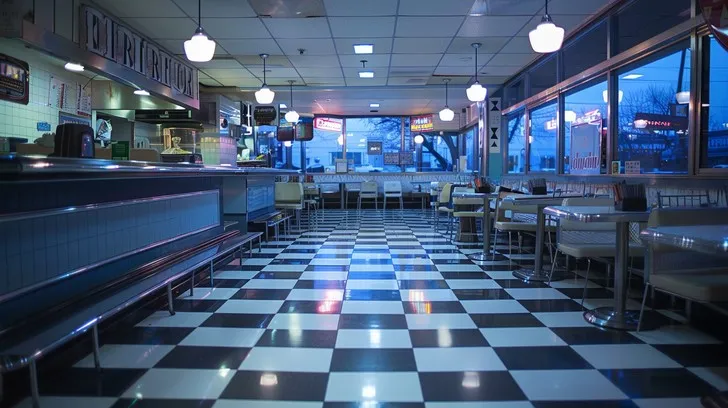
Photo: Henry Bellagnome from Troy, New York, United States, CC BY-SA 2.0, via Wikimedia Commons
Last Tuesday I called Rosie's Diner to order a corned beef special to go, and the woman who picked up — Deb, though she never told me that; I just know — said, 'Extra Russian dressing, rye bread, and don't tell your wife about the fries.' She was right on all three counts. I have not lived near this diner for four years. She still remembered.
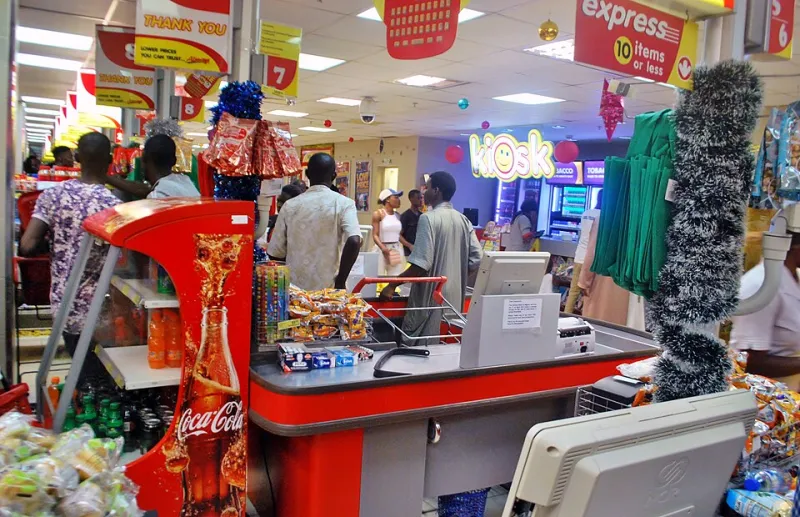
I hung up and sat in my car for a second, weirdly emotional about a sandwich. Then I drove past a self-checkout kiosk asking a man to please place the item in the bagging area, and I started thinking about what we're actually trading away here.
The Regular Is Endangered
There's a word for what Deb and I have, and it's 'regular.' It used to be free. It used to be the default. You showed up enough, and the world learned your name, your order, your kid's soccer schedule. It was one of the few status systems in America that ran on attendance instead of money.
That's changing, and not because anyone voted for it. The diner got bought by an app. The hardware store became a fulfillment center. The barber's chair became a booking algorithm that has never once recognized me. Personalized commerce — the kind where a human on the other end of the line says 'your usual?' — is quietly repositioning itself as a premium experience. Something you pay extra for, or something you have to live in the right zip code to access.
Being known used to be a feature of ordinary life. Now it's closer to a concierge service.
Three Businesses That Still Pick Up the Phone
I wanted to know who's holding the line, so I spent a few weeks calling around. Not surveying, not interviewing — just calling businesses the old-fashioned way and seeing who answered.
Hartke's Hardware, Columbus, Ohio. A man named Ray picked up on the second ring. No menu, no 'your call may be monitored.' I described a stripped screw in vague, embarrassing terms, and he said, 'Sounds like an extractor, quarter-inch, and bring the bracket in if you're not sure — we'll eyeball it.' When I asked how business was, he laughed. 'We're not for everybody anymore. But the folks who come here, we know their projects. We know their dogs.' His phone still rings because contractors won't waste an hour driving to a big-box store to be told to check aisle nine.
Mabel's Flowers, Macon, Georgia. Mabel's daughter answered, asked who it was for, and immediately said, 'Your mother's the one who likes the yellow ones, right? Last time you sent those.' I hadn't mentioned my mother. This is a business that keeps a mental file on three generations of a family and deploys it without being asked. She told me roughly 60% of their orders still come in by phone, mostly from people who 'want to talk it through.' Imagine that — wanting to talk it through.
Rosie's Diner, suburban New Jersey. The aforementioned Deb. She estimates the diner takes forty to fifty to-go calls a day, all answered by a person, because 'the app charges us and the customers hate it, so we just... answer.' The radicalism of that sentence deserves a plaque.
What We're Losing, Precisely
It's easy to be sentimental about this stuff and hard to be specific, so let me try to be specific.
We're losing memory as a service. A chatbot can look up your order history; Deb can infer it. When my father died, the florist didn't need me to explain the arrangement — she'd done the funeral flowers for my grandmother in 2011 and remembered what the family liked. No knowledge base entry could replicate that. It's memory plus judgment plus a stake in the outcome.
We're also losing a low-cost form of belonging. Not every relationship needs to be deep. There's real value in the shallow-but-warm ties — the clerk who asks about your kid, the counter person who notices you look tired. Sociologists call these weak ties; they're the connective tissue of a neighborhood. Every kiosk we install removes another strand.
And here's the uncomfortable part: the people most likely to still have a 'regular' relationship with a business are people with time and money. The retiree who can linger at the hardware counter. The suburban family ordering from the same diner for twenty years. Meanwhile, the gig worker grabbing dinner through an app interacts with no one. Recognition is becoming a perk of stability, and that should bother us more than it does.
What You Can Actually Do
I'm not going to pretend one person calling a diner fixes the attention economy. But I've started keeping a mental list, and it costs me almost nothing:
- Call instead of ordering through the app when the place has a phone number. A human probably answers.
- Pick one local business and become a genuine regular at it. Frequency is the whole trick.
- Tip your name into the conversation. 'I'm Mike, I'm the one who called about the screws.' Give people something to remember.
- When a business knows your order, say thank you like it's a thing — because it is one now.
Deb at Rosie's told me something before we hung up that I keep turning over. I asked how she remembers everyone, and she said, 'Honey, I don't try to remember. I just see the same people over and over, and it sticks.'
That's it. That's the whole technology. See the same people over and over. It's the cheapest, oldest system we ever had for making strangers into neighbors, and we're uninstalling it one kiosk at a time.
The corned beef special was excellent, by the way. Extra Russian dressing. Don't tell my wife about the fries.